


In New Jersey, staying active is part of how we live, whether it’s early morning workouts, weekend sports, busy commutes, or long walks along the shore. When joint pain or injury disrupts that rhythm, choosing the right bone and joint specialist becomes essential. To help guide your decision, Select Surgeons, an independent physician evaluation organization, created a curated panel of board-certified bone and joint specialists from NJ. Read about them below.
Platelet-Rich Plasma: Helping the Body Heal, Not Just Hide the Pain
SUMMIT HEALTH

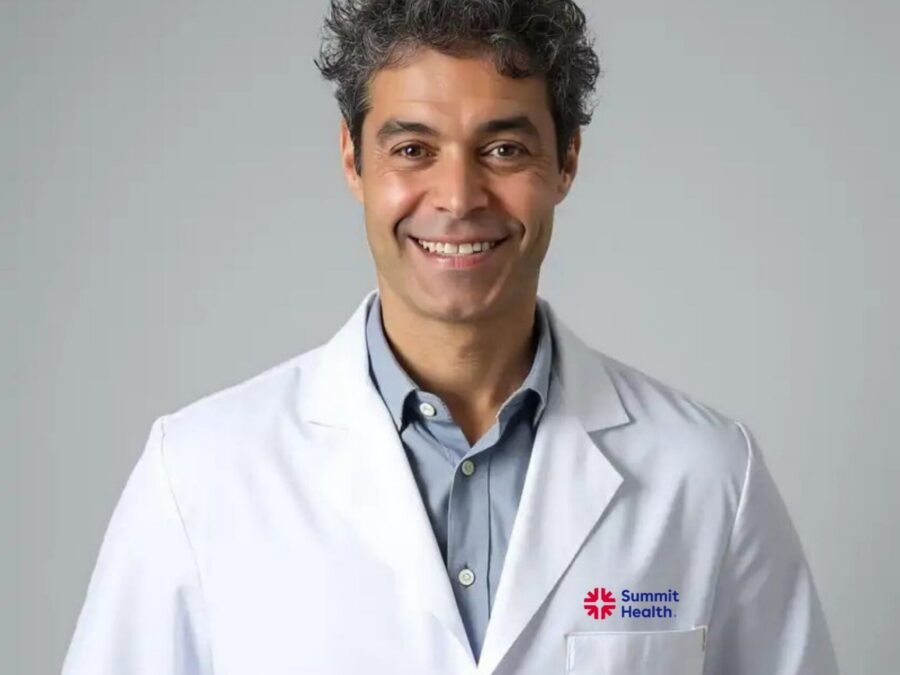
Platelet-rich plasma (PRP) has become a very valuable tool in treating a wide range of musculoskeletal conditions. At Summit Health, Dr. Alon Terry, who specializes in non- operative spine care and sports medicine, and Dr. Rikin Patel, who specializes in interventional spine and sports care and regenerative medicine, explain why.
“What makes PRP compelling is the biology: platelets are loaded with growth factors, and when concentrated at the site of injury, they help recruit repair cells, stimulate collagen and blood vessel formation, and shift a stalled, degenerative process back toward active healing,” says Dr. Terry. “In other words, we’re using the patient’ s own biology to jump- start and amplify the body’ s own healing cascade.”
“If your body’ s healing response is a construction crew, a steroid injection is like turning off the fire alarm,” adds Dr. Patel. “It may quiet the pain and inflammation temporarily, but it doesn’t repair the damaged building. PRP, on the other hand, sends more builders to the jobsite, providing the signals that support tissue repair and recovery.”
PRP can be used to treat osteoarthritis of the knee, hip, and shoulder; tennis and golfer’ s elbow; plantar fasciitis; and degeneration or tearing of the rotator cuff tendons, gluteal tendons, Achilles tendon, and patellar tendon. For decades, corticosteroid injections have been a common treatment for those kinds of injuries because they can provide rapid symptom relief. However, repeated corticosteroid injections can accelerate cartilage degeneration and weaken tendon tissue in certain settings and result in diminished benefits over time.
“PRP offers a different philosophy—working with the body’ s biology rather than suppressing it,” says Dr. Patel. “Because PRP is created from a patient’ s own blood, the risk of allergic reaction, side effects, or disease transmission is extremely low, and its safety profile has been excellent when performed appropriately.” Realistic expectations are a must for patients, according to Dr. Terry.
“PRP isn’t a miracle cure and does not always lead to meaningful improvement in symptoms,” he says. “For the right patient, though, PRP is a safe, biologically sound option that can preserve tissue and help delay or avoid surgery.”
Summit Health Neurosciences and Pain Management 140 Park Avenue, 2nd Floor, Florham Park• 1 Diamond Hill Road, Bensley Pavilion Berkeley Heights • 973-718-5800 • summithealth.com
Less Surgery Than Ever for Scoliosis Patients
THE PEDIATRIC ORTHOPEDIC CENTER

Scoliosis is being diagnosed in more children and adolescents these days, but the need for surgery is actually lower. Dr. Mark A. Rieger is a fellowship-trained pediatric orthopedic surgeon, the founder of the Pediatric Orthopedic Center, and the lead surgeon of the Scoliosis Center. As the managing partner of an eight-physician practice, he has helped build a program capable of offering both non-surgical precision and surgical depth rarely found under one roof.
He explains the paradox: “Increasing awareness by pediatricians and school nurses, implementation of enhanced bracing and physical therapy techniques, and the use of supplements with vitamin D and calcium have all helped dramatically decrease the need for surgery. If caught early, approximately 96 percent of the patients who would have gone on for surgery will not need to go through that process now. When I started, we avoided surgery in around 70 percent of cases.”
At the Scoliosis Center, Dr. Rieger and his colleagues use in-house fitted bracing and a rapid recovery pathway that reduces blood loss, opioid use, and time away from sports. “My daughter had scoliosis, so I understand what children and their parents go through,” says Dr. Rieger. “We also have support programs where kids can talk to other kids who required bracing or surgery, because we know it’ s a difficult time in their lives.”
That combination of technical precision paired with lived experience is part of what referring physicians and families say sets his approach apart. Artificial intelligence is the next frontier.
“AI is going to dramatically change the world of scoliosis,” says Dr. Rieger. “The enhanced data from ultralow- dose EOSedge imaging, combined with AI input, will allow for more accurate bracing and custom-made rods that improve surgical results while preserving spinal motion. It will increase precision across the board, meaning less need for surgery overall and better outcomes when surgery is required, including less time in the OR, fewer complications, and faster recovery. The treatment of scoliosis is changing exponentially, and how we can help kids is more exciting than ever.”
Locations in Cedar Knolls, Springfield, and Wayne • 973-538-7700 • PediatricOrthopedics.com
Combining Robotic Technology with Personalized Care
NEW JERSEY SPINE SPECIALISTS

While using robotic technology during spine surgery has become commonplace for Dr. Heidi Hullinger and her colleagues at New Jersey Spine Specialists (NJSS), they still often need to clarify one misconception regarding said procedures.
“We perform the surgery and we plan out where the screws go; the robot does not,” she says. “The only thing the robot provides is an arm that positions in the direction that we want to place a screw with a high degree of precision. The result is less soft tissue disruption, less amount of X-ray exposure, smaller incisions, and often quicker recovery times. We’ve even had some patients going home one day after a multi-level fusion.”
According to Dr. Hullinger, the key factor to successful use of robotic technology remains the training of the doctors who operate it. “Our team at NJSS has been trained on it, and we have been using it now for quite a while,” she says. “There is certainly a learning curve to it, but we have been involved with multiple previous versions, so we’re very familiar with the best ways to optimize it. It can even be used for more urgent cases such as trauma injuries or fractures and is useful for larger scale fusions.” Current robotic technology is intended for cases when there’s instrumentation involved. Even then, though, there can be cases where it just may not be useful or it’s not necessarily needed.
“Everyone here at NJSS is well trained with using all techniques, including performing spinal fusion surgery, whether with or without a robot,” says Dr. Hullinger. “If for some reason the robot is not working properly, we know how to detect that and adapt accordingly to the situation.”
Whether using robotic technology or not, Dr. Hullinger and her colleagues provide all patients with very individualized care. “We are not churning through patients every 10 to 15 minutes,” she says. “We take our time with patients to make sure that they fully understand what is going to be the best procedure for them and that they are engaged in the decision process.”
33 Overlook Road, Suite 305, Summit • Hackensack UMC Mountainside Hospital Harries Pavilion: 2nd floor, Suite 1B1 Bay Avenue Montclair • 908-608-9619 • njss.net
Collaborative Efforts to Provide the Best Possible Orthopedic Care
ATLANTIC HEALTH

Dr. Nicholas Avallone, dual board-certified in orthopedic surgery and orthopedic sports medicine, has spent most of his career treating athletes of all ages who have experienced bone- and joint-related issues. But after being named the system medical director of Orthopedics for Atlantic Health last October, he also oversees a broad scope of talented orthopedic physicians who provide care to patients at six hospitals in New Jersey.
“Over the past year, a pretty significant portion of my time was devoted to making sure our system provides more standardized orthopedic care in an organized manner that results in the best care possible,” he says. “No matter what Atlantic Health hospital you go to, you should receive the same level of great care.” Dr. Avallone praises Atlantic Health physicians, and those in the local communities they work with, for their ability to address virtually any orthopedic disorder.
“Even if I look just at my own group (Atlantic Medical Group in Morristown and Rockaway), we have super-talented foot and ankle surgeons taking care of very complex issues, from arthritic problems to major reconstructions,” he says. “I have also been so impressed with our orthopedic oncologists, who are just amazing wizards in helping to salvage limbs and lives with extraordinarily complex surgical cases. We also feel that we have a very strong contingent of total knee and hip joint replacement surgeons.”
Other Atlantic Health specialty areas are also growing, according to Dr. Avallone. “The collaborative effort between our orthopedic spine and neurosurgery for spine disciplines to really tackle more complex cases close to home, and our pediatric hospital at Goryeb Children’s Hospital in Morristown has some amazing pediatric orthopedic surgeons who are making sure that the next generation grows up healthy and strong.”
Dr. Avallone and his orthopedic colleagues share the same goal of wanting to take care of their communities and provide the best care and outcomes possible. “I have really been very impressed by the fact that surgeons across Atlantic Health are very happy to work with one another in a collaborative way to achieve those goals,” he says.
Patient-Focused Hand Surgery
RICHARD Y. KIM, MD
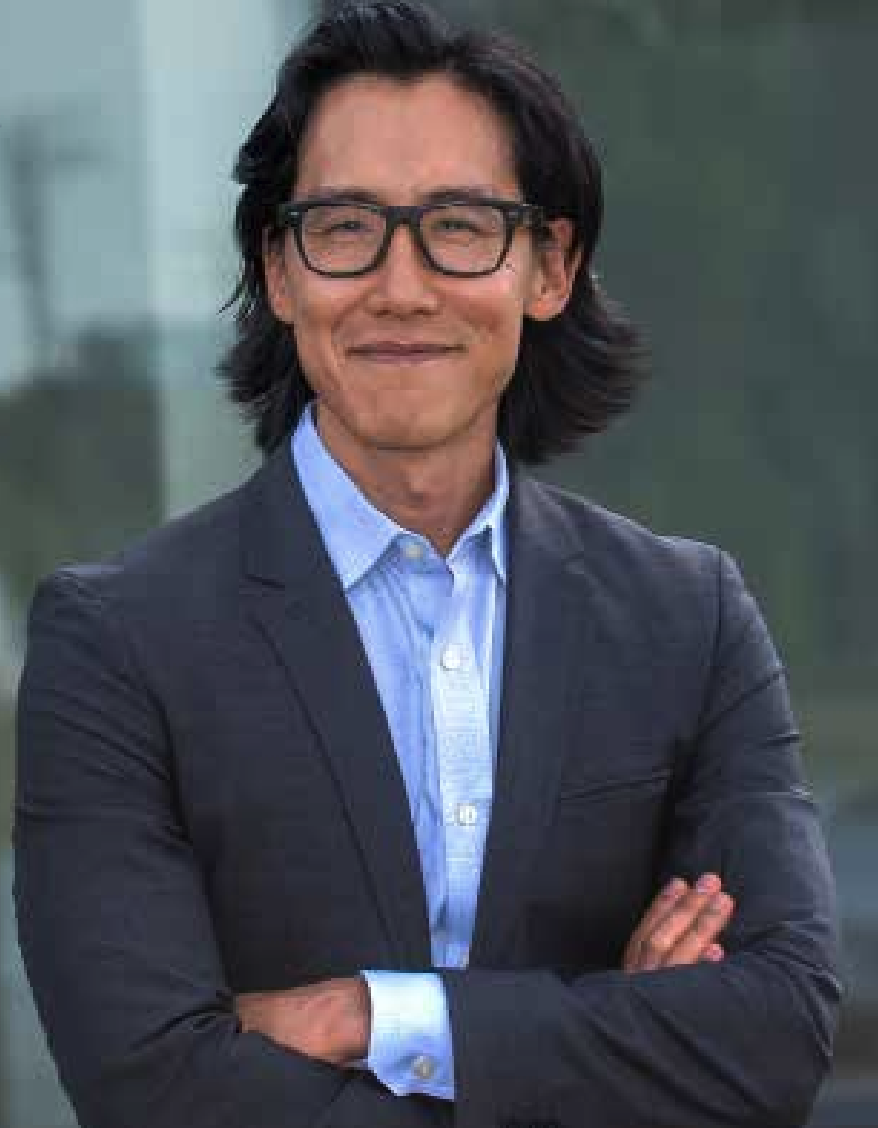
Dr. Richard Kim takes a hands-on approach to patient care, and that’s no pun intended for this experienced hand surgeon. “I think that’s one thing that is different about me,” he says. “I call my patients with all of their results. I don’t have a physician assistant. I take out all of the stitches I place myself. Patients are the sole focus of my practice.”
His personal touch goes above and beyond, particularly in terms of communication. “If patients call me anytime, I will always call them back,” he says. “If they are having surgery, I call them before and after to check on them. I actually limit how many people I see each day to make sure each patient has enough time to talk to me about what is really bothering them.” After serving as chief of hand surgery at Hackensack University Medical Center for a decade, Dr. Kim started his own private practice in 2017. He sees patients who range from newborn babies to 90-year-olds, making him one of the few doctors in New Jersey to treat such a wide variety of age groups. To do that so successfully, Dr. Kim remains on top of new advances in his field.
“Unlike some other hand surgeons, I do a lot of arthroscopy and wide-awake surgery,” he says. “The latter procedure comes with very minimal anesthesia risk, and I think for patients who may have multiple co-morbidities, it’s often safer. For certain types of injuries involving tendons or for tendon transfers, it’s especially helpful because I can have the patient participate during surgery by providing immediate feedback.”
Education is another top priority for Dr. Kim, who is an assistant professor of clinical surgery at both Columbia University Vagelos College of Physicians and Surgeons and Rutgers New Jersey Medical School. For his patients, he says, “I try to educate them on their anatomy and issues, the pros and cons of the different treatments available, and what may be the best path forward to meet their timing and life needs.”
113 West Essex Street, Suite 203 Maywood • 201-880-7766 • richardkimmd.com
Technology and Techniques Improving Spine Surgery Recovery
ATLANTIC BRAIN AND SPINE

The biggest misconception that Dr. Farah Musharbash, an adult and pediatric spine surgeon, clarifies for his patients relates to recovery time. “Years ago, traditional spine surgery usually meant a large incision and several days in the hospital,” he says. “That’s no longer the case. Many of my procedures are done on an outpatient basis or with a single overnight stay—even spinal fusion, which is the most involved type of spine surgery. Many of my patients were able to get back to work within a week.”
For people with demanding jobs and families who can’t afford to be sidelined for weeks, that speed matters as much as the surgery itself. Whether it’ s a disc herniation in someone who sits at a desk all day, cervical radiculopathy causing nagging arm pain, or an overuse injury in an otherwise active adult, the goal is the same: fix the problem through the smallest possible footprint and get the patient back to their life fast.
“I have a big focus on doing minimally invasive and endoscopic surgery, along with robotic and motion- preserving procedures,” says Dr. Musharbash. “This integration of technology into spine surgery in the past ten years has dramatically changed the recovery process.” Dr. Musharbash is among the highest-volume robotic-assisted Pars repair surgeons in New Jersey. “Many young athletes want to return to their sport as quickly as possible,” he says. “What I can often offer them is a minimally invasive, motion- preserving robotic procedure called a Pars repair, instead of a fusion. Most are back to their sport within about three months.”
Dr. Musharbash believes that technology, including artificial intelligence (AI), will play a key role in the continuing evolution of spine surgery. “I think the next 10 years will focus on using AI to plan surgeries for the best possible outcomes,” he says. “ AI can synthesize an enormous amount of data and build models where a surgeon can enter an operative plan and adjust it based on complication risk and likelihood of success. There’s going to be much more focus on personalization and on predicting outcomes. It’s an exciting time for the field of spine surgery.”
973-993-7100 • atlanticbrainandspine.org/musharbash
New Chapter in Orthopedic Care
LOUIS RIZIO, MD

When he started his career as an orthopedic surgeon 25 years ago, Dr. Louis Rizio dreamed of the day when new ways would be developed to regenerate and heal orthopedic tissue. That day is now closer than ever. “I think that now we’re really at the turning point where biologic enhancement with growth factors, bio-absorbable implants, and other options like genetic manipulation and CRISPR technology are being used more widely,” he says. Dr. Rizio uses the latest bio-absorbable implants, particularly with pediatric sports patients. “They are a little safer around the growth plates for younger patients,” he says. “I now call them bio-incorporable materials because they actually incorporate themselves into the tissue. They become part of the normal tissue, whereas a plate, screw, or joint implant will fatigue over time. These actually allow for the body to grow tissue into it and become that tissue. So they add strength, and it remains strong.” Other elements Dr. Rizio offers are growth factors through platelet-rich plasma (PRP) and stem cell applications.“ As an early adopter of these options, I really think they have enhanced both my surgical and non-surgical practices when treating muscle injury and chronic tendon problems. There weren’t a lot of good options many years ago, and the use of PRP in stem cells has really changed the game.” Dr. Rizio believes that with his field now having reached the intersection of all of these evolving treatment options, there’s going to be an explosion in the management of various issues, notably osteoarthritis and arthritic care. “I think we’re close to seeing that,” he says. “We’ve been kind of researching at the periphery for a long time, and we’re now seeing an extreme advancement. Overall. As a sports medicine physician and surgeon, my primary goal has always been to get my pediatric and adult athletes back to what they want to do faster and safely, and I think that using all of these enhanced materials allows me to have greater confidence in doing just that.”
200 South Orange Avenue, Suite 230 Livingston • 973-322-7005 • drrizio.com • Instagram: @drrizio