


Bruce Springsteen has called her his “forever crush” and “the one-woman Wall of Sound.” Steve Van Zandt claims she’s the “greatest singer in the world.” She sang backup for Frank Sinatra, became Whitney Houston’s godmother, and cherishes a decades-long friendship with Dionne Warwick. She’s played the Stone Pony, received the Springsteen Center’s inaugural American Music Honors, is cemented on the Count Basie Center’s Walk of Fame, and performs multiple shows here every year. So, while she may technically reside in New York, we feel well within our rights to claim Darlene Love as one of our own.
The legendary girl-group singer-turned-solo songstress, 85, is blessing New Jersey with three concerts this holiday season: December 4 in Morristown, 11 in Englewood and 23 in Red Bank. In a recent interview with New Jersey Monthly, Love revealed that she plays her longest shows here for audiences she has come to consider family.
Of course, we have to talk about ‘Christmas (Baby Please Come Home).’ That song was recorded in California during a heat wave, right?
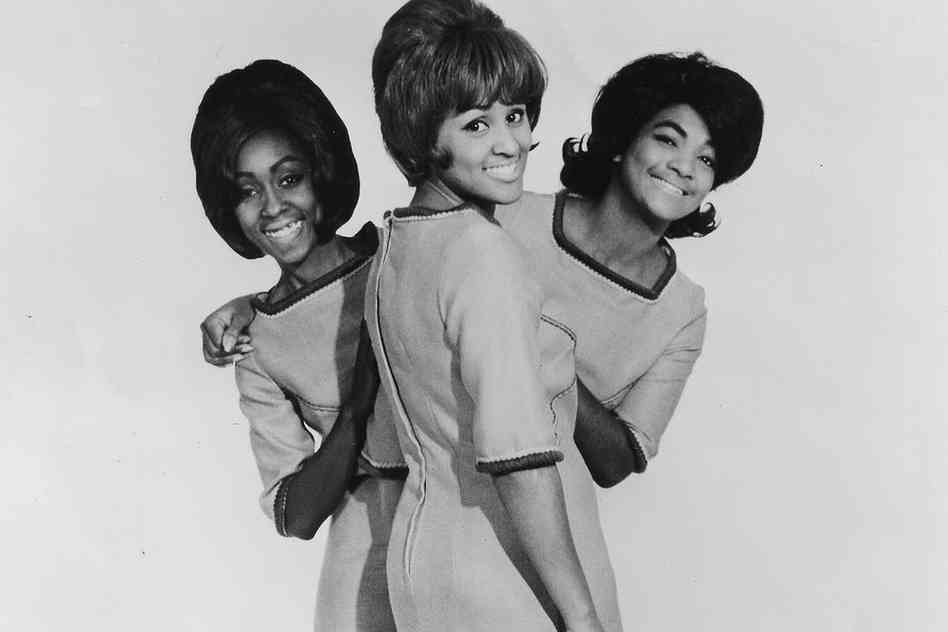
In August. I think it was 105 degrees. We were in the studio, and [producer] Phil Spector made it ice-cold inside and put Christmas lights up all over the place. He didn’t realize singing in a cold room is the worst thing you can do to a singer. We complained, but it didn’t do any good: ‘You gonna go get us some gloves, some fur coats?’ [Laughs] That started it all. It started my solo career.
Everyone in the studio still ended up getting into the holiday spirit and being in awe of the finished product, realizing, Wow, we really created something special here.
And nobody was doing rock ’n’ roll Christmas songs yet. We were the first, you know—so it was a little intimidating, especially with me coming from my church background. And that album is still as popular today as it was 63 years ago, which is really amazing. No record lasts that long and becomes a hit again. In December 2023, they wanted to give me a platinum record, and they got Bruce [Springsteen] to come onstage and give it to me. I have a wonderful picture of me and him holding the album up. So, you know, life still goes along. I’m ready to do whatever God has ready for me to do. They say, like the Boy Scouts, just be ready. At all times, be ready. So I’m always really happy about things that are happening to me now, in the later years. I don’t think I would’ve appreciated all of that back 60 years ago, at the beginning of this. Things are still happening for me, which is wonderful.

Two decades after recording ‘Baby Please Come Home,’ you’d turned to housework to make ends meet because you weren’t booking singing gigs—in large part because you’d never been properly credited or paid royalties for several of your hit ’60s recordings with Phil Spector. You were cleaning a woman’s bathroom in Los Angeles when that song came on the radio down the hall. Is it true that it brought you to tears?
It did. There’s an ugly cry—people can get really ugly when they cry, you know? But it just went down into my heart, down into my soul. For me to be cleaning a bathroom when that song came on, I was just like, ‘Okay! I hear you! I’m goin’. I’m goin’ back to where I’m supposed to be.’ And we were raised like: ‘If you have something to do, God has given you a gift. You’re gonna take care of it. You’re gonna grow and get into that gift.’ It was just those highs and lows we have in our business. A lot of people give up because the low can seem so deep that you just can’t crawl out of the hole. But I was determined: ‘Okay, here we go again.’ I knew a lot of people, and they’d treated me nice. Many of the people who had started with me were such stars by then. I had a chance to call on them, but I never did. I was never one of those people who would go to somebody and say, ‘I really need help. Would you give me some money?’ I didn’t. I just said, ‘Here I am. I got that same talent; I just need to work.’ And that’s what happened. It happened because it was supposed to—and, I always say, at the time it was supposed to.
In his memoir, Steve Van Zandt recalls being wiped out by your performance of the gospel song “Marvelous.” You had a religious upbringing—your dad was a minister, and you started out in church choir—and you believe you’re praising God through the gift of your voice. Before you started singing with the Blossoms, how immersed were you in secular music, which was considered the devil’s music at home?
Oh, yeah, we couldn’t listen to the devil’s music in our house. That wasn’t allowed. I heard it at my girlfriends’ house, when we were hanging out, and I loved it. And because a lot of our friends came from gospel, like Sam Cooke and Aretha Franklin—most of your singers, especially your Black singers back in the ’50s, ’60s, ’70s, came from church—that’s all we really knew. Because, honey, we were in church all day long. Go to Sunday school, afternoon service, then evening service. That’s all I did for years, just back and forth. School, gym—I loved sports—and back home, homework, go to school.
When you were in high school, doing backup vocals with the Blossoms for Sam Cooke, did he pick you up for a recording session in a Cadillac convertible?
A white Cadillac convertible. He wasn’t driving—we got his car. One of the Blossoms could drive, and she asked him, ‘Can we drive your car to pick up Darlene from school?’ I was still in school! It was hysterical, ’cause I told everybody in school that he was coming, but I didn’t realize he wasn’t coming; she was coming!
Oh, that’s the letdown of a century!
But that made it even greater—not because Sam wasn’t there, but because we got a chance to sit in his car and hang out, you know? Everybody knew it was his car. We tried to get the whole school out there to see. And I’d just told everybody. [Laughs]
I love that.
It’s all fun—until you get older, and you have to sign contracts, and people don’t want to pay you. All of that goes along with it. Sometimes all of us get together and say, ‘Why did we ever get into this business?’ [Laughs] But it’s the joy of singing. I think singing, more than anything else in the world, brings people together. Even when I went to Japan, and they could not understand a lick of English, they sang all the songs, you know? It brings the world together, I think, more than anything else.
So I think that was the joy—we could see more people. Our churches were very small: 30, 40, 50 members. But when you’re in the secular world, you get to sing in front of thousands of people, and I think you’re reaching them, you know what I’m saying? There are all these wonderful people who want to hear you sing and know you came from gospel. I think they even love that more.
And “All Alone on Christmas,” which Steve Van Zandt wrote for you, is kind of the sister song to “Baby Please Come Home”—and so underrated.
You know what happened—Chris Columbus was directing the second Home Alone movie, and he wanted to use “Christmas (Baby Please Come Home).” I said, “No, no, no, no; that song’s been done. Let’s have another Christmas song.” And he said, ‘Well, we just need the right person to write it.’ And of course, I said, ‘Stevie! He’s the only one who could probably do justice to a Christmas song.’ So we went into the studio and recorded “All Alone on Christmas.” And we were just supposed to make the record, right? Then Chris came to one of the sessions. He said, ‘Oh, we have to make a video.’ That was the first video I ever made. The E Street Band is there. I mean, they put it all together. I’m telling you, I have so much to be grateful for.
I love that video—Macaulay Culkin is on Clarence Clemons’s shoulders at one point.
Yes!
You sang backup for Sinatra’s ‘That’s Life,’ and have described him as electric, magnetic—how the air in the room changed before you’d even realized he’d entered.
Yes! [Laughs] And that’s amazing, because you don’t know that feeling until it happens to you.
And you were Whitney Houston’s godmother …
Yes, yes! And that was like: Who ever knew she was going to be who she was? She was a little girl—six, seven years old—when I met her. You never had the feeling around her that she was gonna be this gigantic star that people worshiped, because she was just regular—even after she became a superstar. I became a part of their family, because Dionne Warwick used to say, ‘Well, I got my aunt [Cissy Houston] singing with me; I got my sister [Dee Dee] singing with me—we have to make you a relative, too.’ So they made me a cousin. [Laughs]
In 2009 you performed ‘A Fine, Fine Boy’ and ‘Da Doo Ron Ron’ with the E Street Band. Bruce was positively levitating; he was so giddy to share the stage with you.
[Laughs] I know, that was so great. I don’t know who was getting off more, him or me! That amazes me, that somebody like him would even be singing one of my songs.
Well, but he’s so influenced by the girl groups! There’s Greil Marcus’s great review of Born to Run—‘a ’57 Chevy running on melted-down Crystals records.’ You sang on those records, though you were uncredited. What do you recall about playing with the band?
Well, it was amazing. The rehearsal was more fun, I think, than actually performing. They knew those songs that I had recorded with Phil Spector, and Bruce kept saying, ‘We’re missing something. It’s not enough. We need another percussionist.’ And that’s all Phil was about: the percussion parts of those records, the drums, everything that was going on. Bruce had the guitars and all that, but he was concerned about that sound that was in the back. It was almost like the band was trying to recreate that sound for me. It was actually like we were in the recording studio. Everybody was having this wonderful time. Like kids, you know what I’m saying? But really enjoying what the moment was like. Actually being there with the E Street Band and with Steve [Van Zandt]—and Stevie is something all in himself. He’s in a whole complete world. And then me and Bruce going back and forth—and singing on the same mic. I’ve never sung on the same mic with nobody! [Laughs] But we sang together—when we were singing ‘fine, fine boy,’ he sang ‘girl,’ and I sang ‘boy.’
I’ll never forget that. It was the 25th anniversary of the Rock and Roll Hall of Fame, and everybody you could even think of was there. And for me to be up there with all them … I was not in the Rock and Roll Hall of Fame yet. It was a year or two later, I think, when I got in. I know that had a lot to do with the speech Bruce gave that night. I said, “Well, if that’s who you think I am, all right.” [Laughs]
And then in 2023 you were among the inaugural honorees of the Springsteen Center’s American Music Honors.
Yes! That was amazing, too, because Bruce could have put anybody else in the world in that first class, but, as he said, ‘Darlene has to be in that class. She’s gonna be the first in this one.’ That’s one of the trophies I cherish. Bruce’s wife, Patti, was going to induct me that night, but she and Bruce both got Covid. So Bruce inducted me from his kitchen. And he went on and on and on about my career. And I said, ‘Well, he said everything I was going to say, so I guess I better sit down.’ [Laughs]
You perform multiple shows here every year. Have you noticed anything distinct about Jersey audiences?
I’ve met so many people since I’ve been in New Jersey. And a lot of those fans were Bruce’s fans and Stevie’s fans, so they all became my fans. And it just so happens, I get more work in Jersey than in New York. You never realize how large New Jersey is. I work about four or five jobs a year in New Jersey, almost all the way to Philly [laughs], from one end to the other. They are my family, because there’s no audience like them. The same people come back to see me every year at Christmastime. I do longer shows in Jersey than I do anywhere. Because the audience, they’re in there, you know? I got four generations of fans coming to see me in Jersey, which is amazing.
This conversation has been edited and condensed for clarity.