

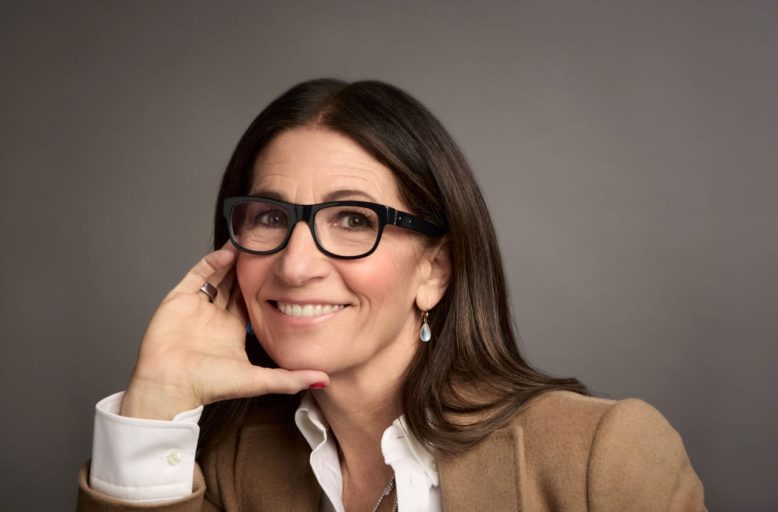
Bobbi Brown is a beauty industry icon, bestselling author and entrepreneur—and now, she’s telling her whole story in a new memoir, Still Bobbi (Simon & Schuster), out now. Three decades after founding Bobbi Brown Cosmetics, which she later sold to Estée Lauder, Brown launched Jones Road, her clean beauty brand known for its moisturizing, easy-to-use products and her signature “no-makeup makeup” look. The company, which surpassed $100 million in revenue last year, is headquartered in Montclair, where Brown has lived for nearly 40 years.
Below, Brown reflects on the moments that shaped her, the power of authenticity and why she decided to write her most personal book yet.

Bobbi Brown’s memoir, Still Bobbi, is out now.
You’ve written nine bestselling books. Why was it important for you to tell your own story now?
I wasn’t planning to write a memoir. But one day, my now-agent literally showed up at my office in New Jersey and convinced me that I needed to tell my story. And because I liked her, I said yes. I thought it would be more about how to build a business while being a devoted wife, mother and friend. I kept saying it wasn’t a memoir but rather the stories of building a life. But it evolved into something more: It’s been a cathartic experience, helping me understand who I am, why I’ve been able to do the things I’ve done, and how I got here.
What does the title, Still Bobbi, mean to you?
The word “reinvention” is used a lot these days to describe women, their careers and their life stages. It’s often used to describe me, too—and seeing as how I’ve embarked on everything from beauty to wellness to hospitality, I get it; it’s accurate. But despite these reinventions, I’m the same Bobbi I’ve always been; there’s just been a lot of personal and professional evolution.
“I am me” is a phrase I often say, and I even created a campaign around it, because I believe women are enough with who they are already. Still Bobbi is just another way to say that.
Where did you get your love of makeup and beauty from?
My mom was glamorous—the most beautiful woman I had ever seen. My earliest memory I have of her is watching her put on makeup, standing in front of the mirror getting ready to go out with my dad. She wore high heels and applied bronzer to the apples of her cheeks, her neck and her forehead. Then she would take a black Ebony writing pencil and fill in her brows, and put false eyelashes on with a pin or a toothpick. She’d use very pale lipstick. I just looked at her like she was the most glamorous woman in the world. She reminded me of Jackie O. She was stunning. I could never compete with how glamorous my mom was, so what I took away from it was that I needed to figure out who I was.
Then, I saw Ali McGraw in Love Story and realized that she had dark straight hair like me, freckles, and wore very little makeup—just like me. It was the first time I saw myself and my aesthetic, which would become the “no-makeup makeup” look.
How have your definitions of beauty and wellness evolved over the course of your life?
Women today have a new definition of what beauty is. In the ’50s and ’60s, the standard of beauty was the tall, thin, blonde All-American girl. That’s what magazines covered and what movie stars looked like then. Today we see the rise in the inclusiveness, and expansion of beauty, of all types.
I believe in teaching women how to achieve the look that is best for them, versus trying to attain some external standard of beauty. For over 30 years, my message has consistently been about being authentic and being yourself. What’s most beautiful to me is a person who is happy and confident and who embraces who they are, flaws and all. That’s the new standard of beauty.
What inspired you to popularize the “no-makeup makeup” look?
I’ve been a makeup artist for 40 years, but what I say now is what I’ve been preaching my whole career. I don’t follow trends, and most women do not want trends. They want beauty products that are clean, easy to apply, and that just work.
I’m very consistent and have always preferred a natural, effortless look. Even though many media outlets are calling the ‘no-makeup makeup’ look a trend, I’ve been doing it for over four decades. To me, whatever makes you feel the most confident is the best trend to follow. It transcends generations.
You write in the book that you sacrificed “fabulosity” for normalcy when you moved from NYC to NJ. What does that mean to you?
I expand upon it in the book so easily because it was so true then and is still true now: As much as I loved New York, I also loved leaving the city. Montclair is a vibrant town with grass, backyards and a community of really interesting people. We also didn’t want to raise our kids in the city, so after our honeymoon, Steven [Plofker] and I moved to Montclair, and we never looked back.
How did you break into the cosmetic production industry?
Working as a makeup artist in the ’80s, my first thought wasn’t launching a makeup brand—it was creating a line of lipsticks that were the actual color of people’s lips. They didn’t exist, so I started making them myself. On a photo shoot, I met a chemist who said he could make the lipsticks for me. I then started using them on the models I was making up on shoots and sharing them with some of my beauty friends. They loved them, and those became the 10 original lipsticks that launched Bobbi Brown Cosmetics.
Some of your best ideas were born of necessity. What is your favorite “surprise!” product?
Miracle Balm is a must-try, multi-purpose product that instantly makes you look better. When I first got the sample from the lab and put it on my cheeks, I looked in the mirror and said, “OMG. This is a miracle.” That’s where the name came from—it was such a surprise to even me!
Many writers and beauty experts have called Miracle Balm a category-creator because there was nothing like it on the market when we launched it. I’m very proud of that.
Where do you find inspiration?
I’m endlessly curious. I have a very busy brain. I’m always thinking of new ideas. I don’t have any hobbies–I create things, and that keeps me very engaged. Oh, and my three-year-old granddaughter keeps me constantly inspired. I’m obsessed.
Why did you ultimately decide to break from Bobbi Brown Cosmetics/Estée Lauder?
Ultimately, it was time. I stayed at Estée Lauder for 22 years as an employee. Most of those years were joyous, creative and invigorating. The ones near the end were tough, and the last year was miserable. When you have a streak, like I did, it’s hard to admit when it’s over. I loved our mission and brand so much, but as I changed, so did the people, and so the decision I made felt right. There’s more detail in the book, of course!
How did you come up with the name “Jones Road” for your comeback beauty brand?
It’s actually very simple. It came from Waze. I didn’t have a name for the brand, and I needed one quickly. Two days later, my husband and I were driving in the Hamptons, and I was navigating. I looked down at my Waze map and saw Jones Road, and I thought it sounded like a bespoke English brand. I couldn’t use Brown because of the noncompete I’d signed, so I thought I’d use Jones.
Why did you decide to headquarter your business in New Jersey?
Montclair has been my home for 37 years. I raised my family here, and it’s where I’ve launched all of my latest business ventures: the HQ and flagship Jones Road Beauty store that carries the full collection of the line, and the George, a 31-room boutique hotel on North Mountain Avenue that my husband, Steven Plofker, and I designed together. This vibrant town has it all–culture, art, great food, shopping and, above all, an eclectic mix of amazing people. It’s the most incredible place to live and work.
Both your mother and your father gave you life-changing pieces of advice when you were just starting out. What were they?
My mother was the one who asked me, “If it were your birthday and you could do anything you wanted, what would you do?” I told her I wanted to go to Marshall Field’s and play with makeup. That’s when my mom said, “Become a makeup artist.” My dad has given me a lot of great advice. When I first moved to New York, I was struggling to make ends meet, and I asked him to teach me how I could cut costs and save money. My dad told me, “Don’t learn to cut costs–go out and find ways to make more money.” I’m still doing that!


